

Featured
The new Simplified FAFSA is here! Here’s a quick video with some tips that will help you get through it with a minimum of chaos and maximum of financial aid. 🔗
Most recent posts

College admissions consultants can be a huge help in the application process, but when should you engage one?

Checking out colleges this summer? Whether you’re going in-person or virtual, here are some tips to get the most out of your visits.

We keep hearing about tuition increases, but it turns out that the actual cost of college is going down. What does this mean for students and families?

My socials are full of prom and graduation pictures, which means it’s time to talk about how you get money out of the 529 plan to which you’ve been diligently (or otherwise) contributing.
Highlights
We’re almost there: acceptance letters are arriving and the May 1 decision day is right around the corner. For most families, how much schools cost is part of the decision making process.

Happy 2026! Last year I made a New Year’s Resolution and kept it. That makes me a self-appointed expert on New Year’s resolutions. Here are some resolutions for parents planning for college— and my expert advice on how to keep your resolutions.

Filing the FAFSA and CSS Profile raises tons of questions for divorced parents. Here are some answers.


Parent assets seem to be the area that most families and planners focus on, despite the fact that they typically have the smallest impact on the formula of each of the components. Strategies and tactics to minimize parent assets abound, but for most families these result more in nibbling around the edges than actually making a significant dent in SAI.

The College Board’s annual Trends in College Pricing and Student Aid report was released recently. Among the headline findings: college tuition prices increased at extremely low rates for the second year in a row, reflecting both a combination of continued impacts of the pandemic and enrollment pressures from demographic trends.

Happy FAFSA Day! Are you completing the FAFSA for the first time this year? While you’re waiting for the site to load, here are some resources that will help you get through it with a minimum of chaos and maximum of financial aid.

I think Oregon is one of the last places in the US that starts school after Labor Day so my apologies if you’re no longer in back-to-school mode. Here are some resolutions your family might make for the coming school year. And, here’s hoping they don’t get broken as quickly as the typical New Year’s diet-and-exercise resolutions!
Categories
The FAFSA & CSS Profile

Where does the time go? It seems like just yesterday that they were learning to walk, and now my kids are graduating from college?!?
FAFSA Simplification is changing many elements that contribute to the Student Aid Index.
Saving for College
My socials are full of prom and graduation pictures, which means it’s time to talk about how you get money out of the 529 plan to which you’ve been diligently (or otherwise) contributing.

A client’s former advisor told her that she should save $800,000 per child for college. None of my initial reactions to that were appropriate for a client meeting, but how much should you save for college is an important question for a lot of families so let’s dig into that.
Where does the time go? It seems like just yesterday that they were learning to walk, and now my kids are graduating from college?!?

Should you find yourself in the fortunate situation of having more 529 dollars available than needed, there are several things you can spend those dollars on that you might not have thought of:

If you’re a financial advisor, it’s hard to go an hour without talking about I Bonds right now. It seems the word is getting out to the general public now too.

A recent survey showed that while almost two-thirds of parents were saving for college, only about one-third are saving in a 529 plan. That’s unfortunate, since 529s are usually the best choice for savings, for a lot of reasons. On the other hand, it’s not unexpected, given that the vast array of often confusing choices can be a barrier to use. So, how do you choose?
Paying for College
We keep hearing about tuition increases, but it turns out that the actual cost of college is going down. What does this mean for students and families?
My socials are full of prom and graduation pictures, which means it’s time to talk about how you get money out of the 529 plan to which you’ve been diligently (or otherwise) contributing.
About 3/4 of families who appeal their financial aid award receive additional aid. Yet less than half appeal. Here’s how to get more money from the colleges you’re considering.
Work study falls under the self-help column of financial aid. If your aid award includes work-study, you should understand what it is.
It’s tax time, which means it’s time to claim education tax credits you may be eligible for. Unfortunately, a lot of tax software programs don’t provide good instructions for doing so. Here’s what you need to know.

Form 1098-T is a tuition statement that students receive from their college. Form 1098-T isn't filed with your taxes; instead, you use the information to file and then keep it for your records.
Student Loans

Thinking it’s worth taking out student loans to go to your first choice college instead of your second choice? Here’s what recent college graduates have to say about their student loans.
Where does the time go? It seems like just yesterday that they were learning to walk, and now my kids are graduating from college?!?
Rising interest rates have resulted in increases in student loan interest rates for the coming year.

An overview of the three primary types of student loans including insights into which loans don’t require a co-signer.

It’s hard to hear the phrase “student debt” without “crisis” appended. But like most types of debt, there is “good” student debt and “bad” student debt. To understand the difference, it’s helpful to look at the economics of a college degree. A college education confers many benefits, but when evaluating debt the economic ones are key.

Application Process

About 3/4 of families who appeal their financial aid award receive additional aid. Yet less than half appeal. Here’s how to get more money from the colleges you’re considering.
We’re almost there: acceptance letters are arriving and the May 1 decision day is right around the corner. For most families, how much schools cost is part of the decision making process.
Where does the time go? It seems like just yesterday that they were learning to walk, and now my kids are graduating from college?!?

Wherever you are on the college planning journey, here are a few actions you can take before the end of the year.

Getting an estimate of your Expected Family Contribution is really helpful, and it's pretty easy. The Department of Education's unfortunately-named Student Aid Estimator will calculate the FAFSA's EFC for you with a few data inputs; the College Board offers one for the CSS Profile.
Miscellaneous
All blog posts
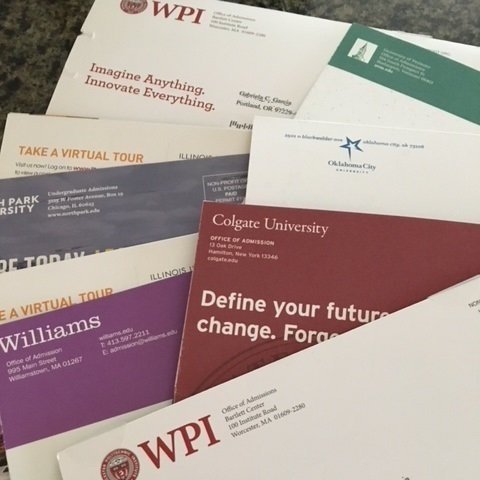
About All That Mail…
If your mailbox is starting to be overwhelmed with college and related marketing promotions, you can thank the College Board or ACT. More on that…
Technically, you can use student loans to pay for any qualified education expense. Practically speaking, because of how they work it tends to be a little more limited.